TIMELINE
ROLE
TEAM MEMBERS
5 Co-founders
Managed Team of 4 Engineers
AWARDS
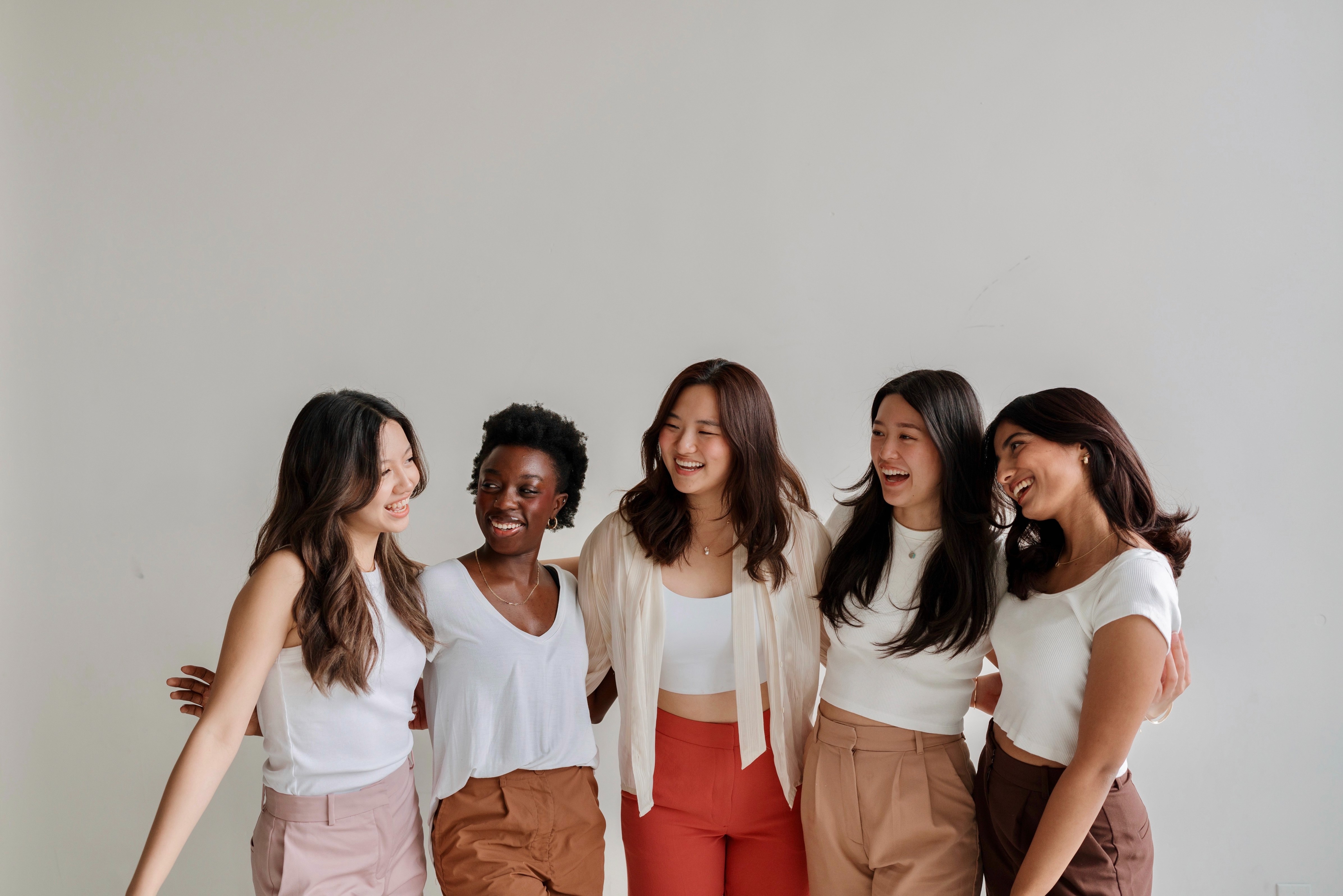
Our founders came together because we all experienced the same problem of constantly being on the hunt for the perfect bra. It had taken us all at least multiple years even beyond puberty to figure out our sizes and what fits our bodies, but even then, we are still afraid to branch out to new brands, new bra releases, and new styles simply because the sizes are always so inconsistent.
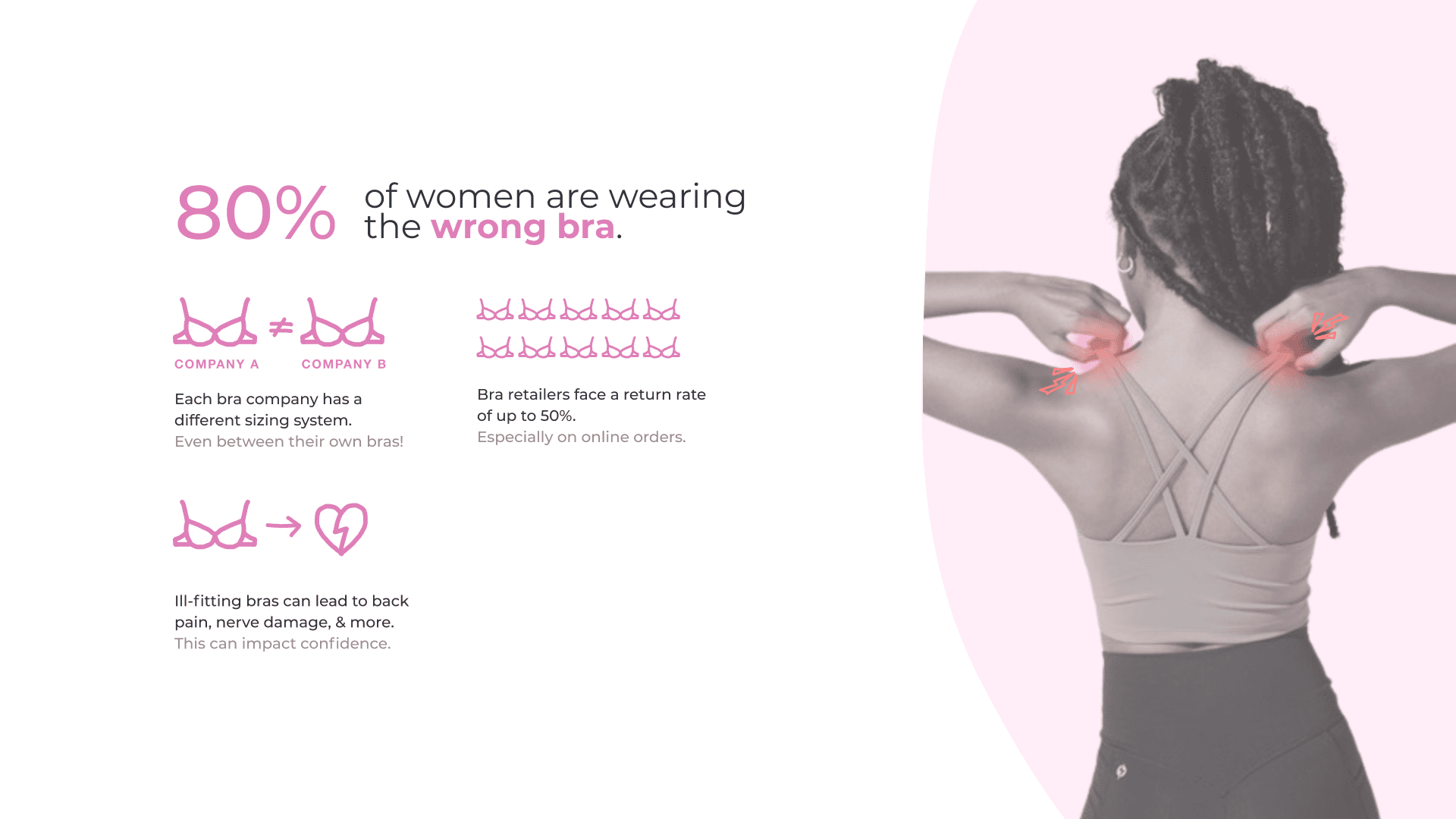
107 million women are wearing the wrong bra. This can lead to physical ailments, low self-image, and a waste of time and money. At the same time, bra retailers lose $3.2 billion each year from returned bras.
I spoke with 150+ real women of all shapes, sizes, and ages. Here were the main insights I collected.
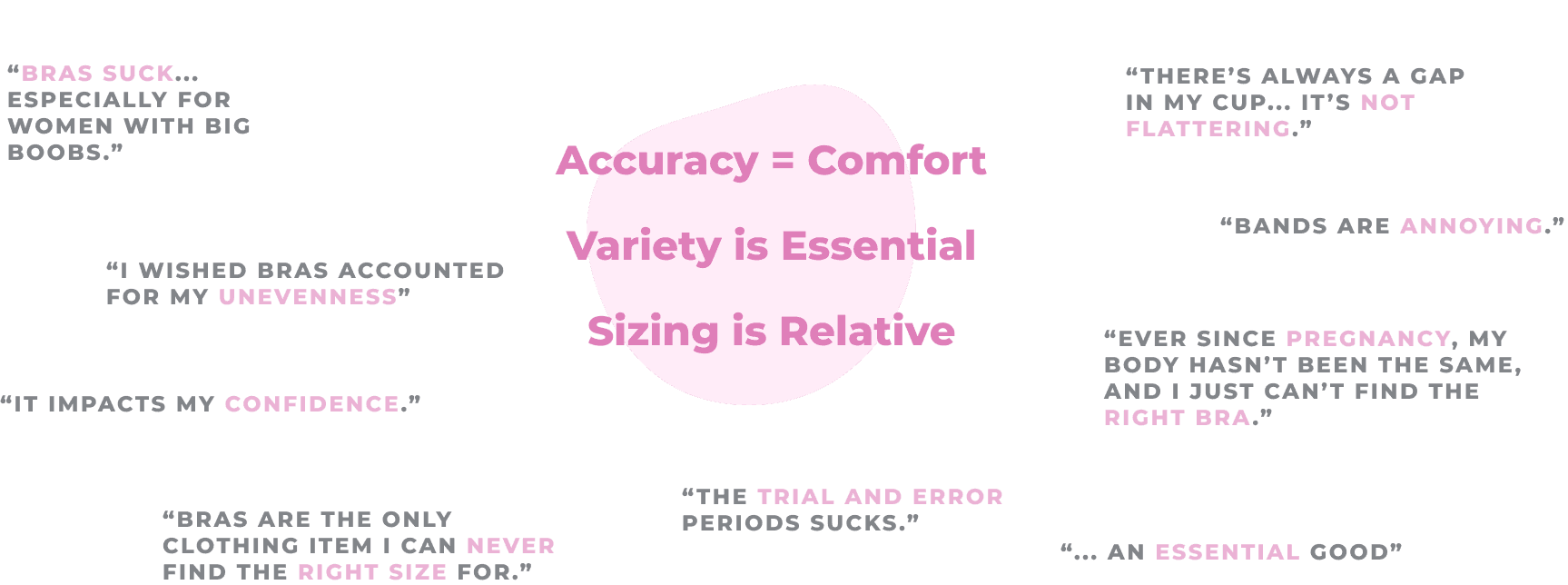
Throughout my user interviews, many users resonated with the inadequacies of in-person fittings, which was the most popular way for women to get fitted for bras. It's also interesting to note that many users talked about only having been fitted in their teenage years and relying on trial and error throughout adulthood.

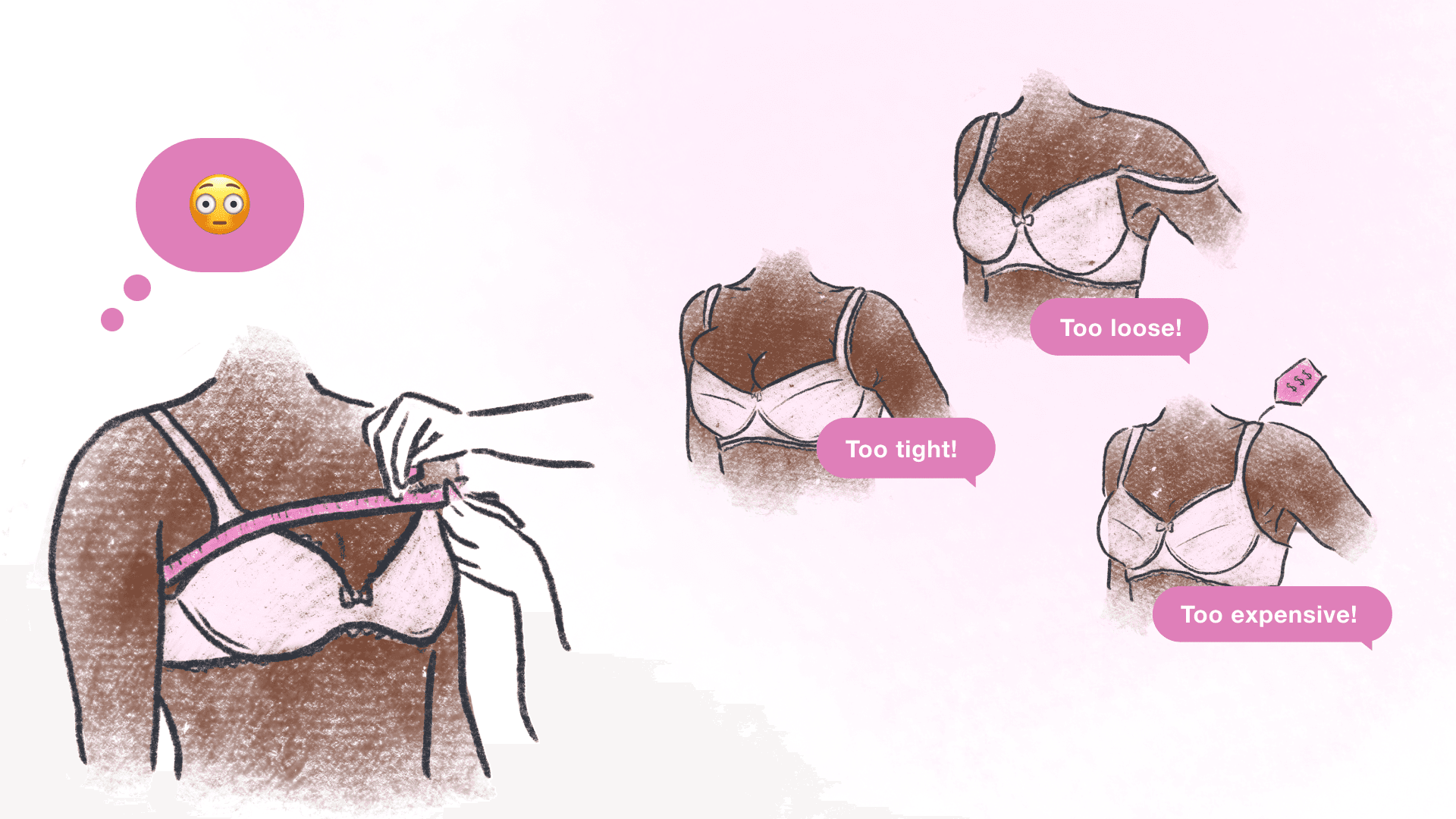
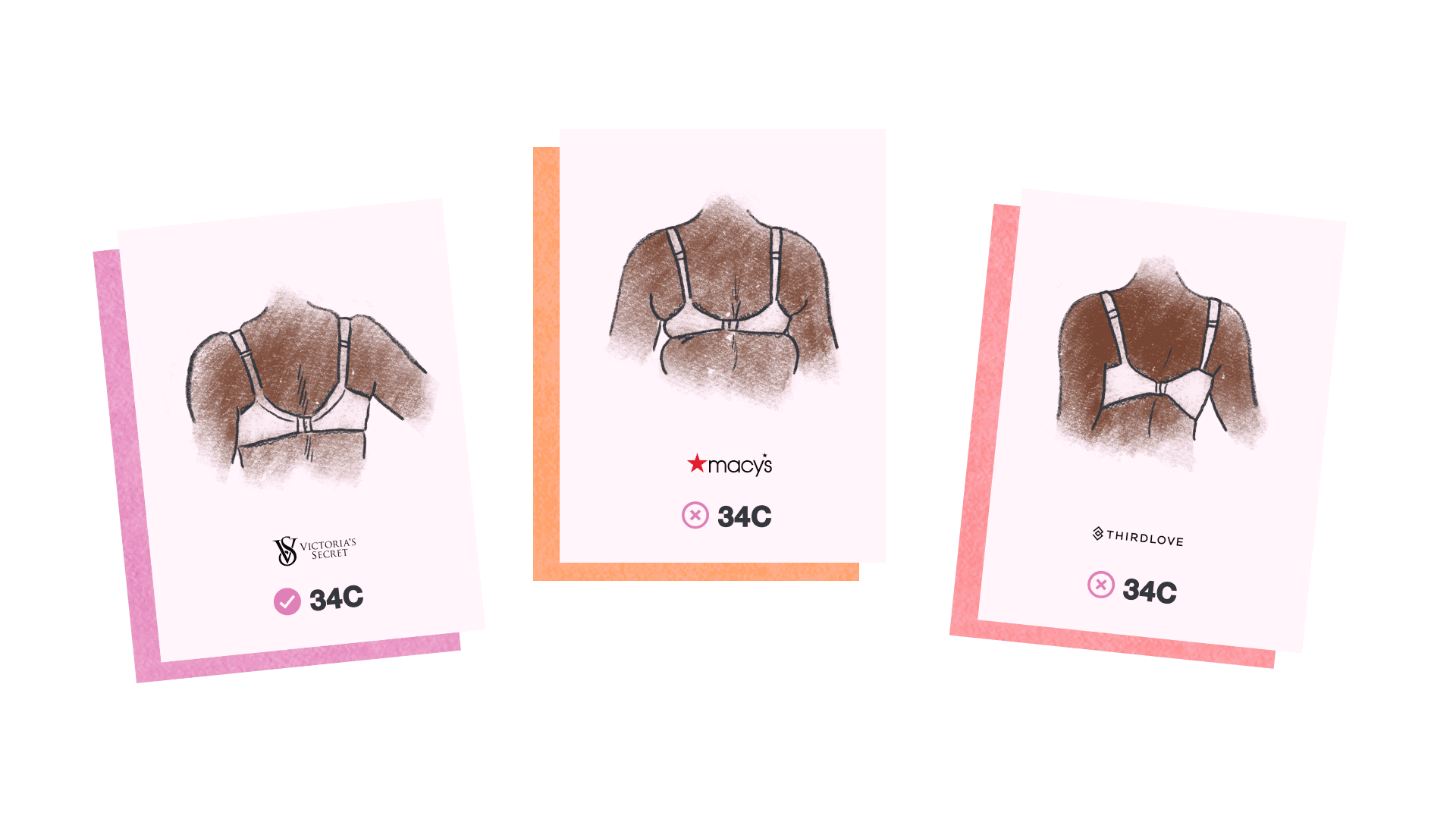
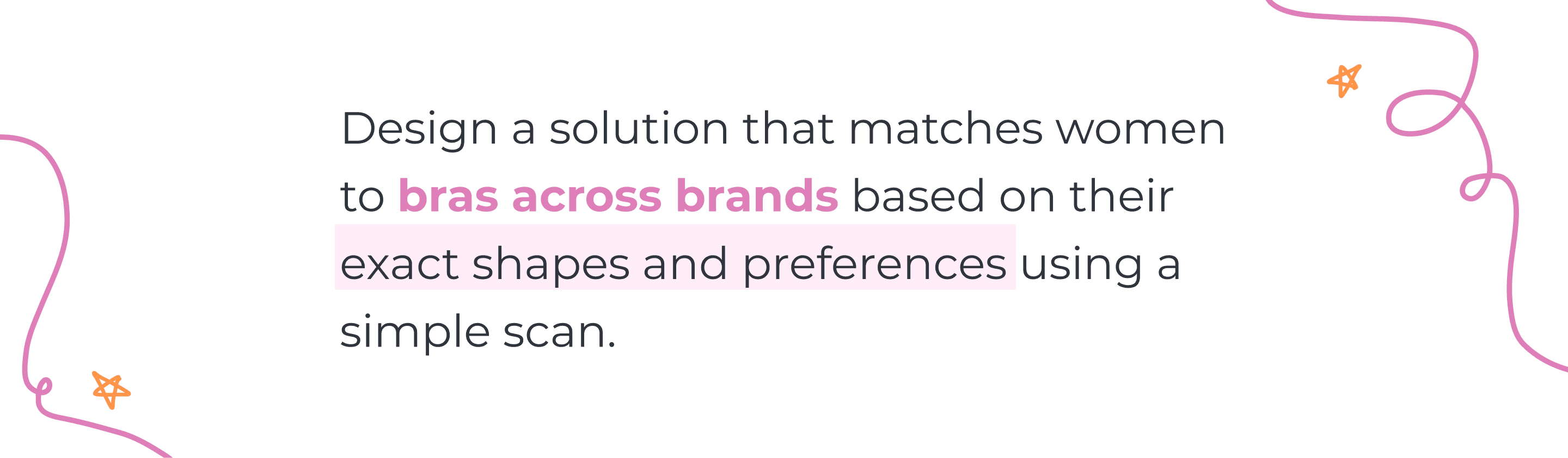
To break this down further, I identified 3 tenets that would make this experience seamless, comfortable, and genuine for our users.
HMW
ensure a user-friendly and accessible scan for all users, regardless of their technological proficiency and body type?
leverage user preference data to personalize bra recommendations?
provide comprehensive details about users' bra matches to empower informed decision-making?
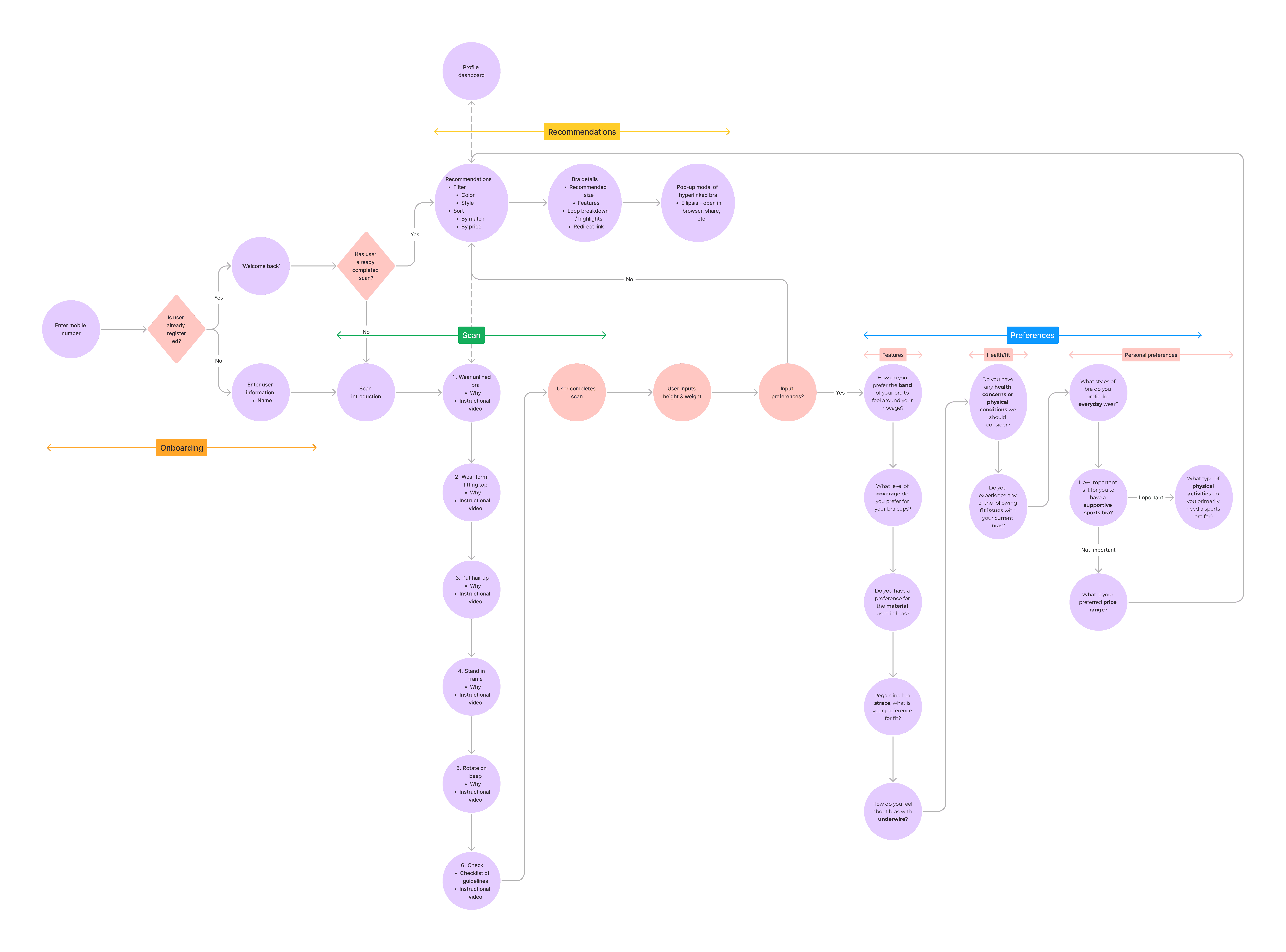
Since I have defined this as a 3-pronged process, I created a user flow map which I used to gather my thoughts and comments through iterations. I used this as a tool to evaluate not only the architecture but also the content of my designs.
Streamlining scan instructions
Since the scan is the core of our value proposition, I wanted to ensure the instructions were accurate and clear to minimize the risk of low-quality scans.
🧐
After the first iteration, 3 out of 5 users still struggled to understand how to position themselves in front of the camera.
Despite including instructions on propping up their phone and staying in frame, they still faced challenges executing the scan due to unclear posture guidelines. Most users also admitted to skimming or skipping the long paragraphs, which made me realize I needed to design with users' likely short attention span in mind so that critical details wouldn’t be overlooked.
The videos posed a challenge on the other end of the spectrum—users couldn’t skip through them, and with each video lasting 5-8 seconds, the total viewing time became quite lengthy.
💡
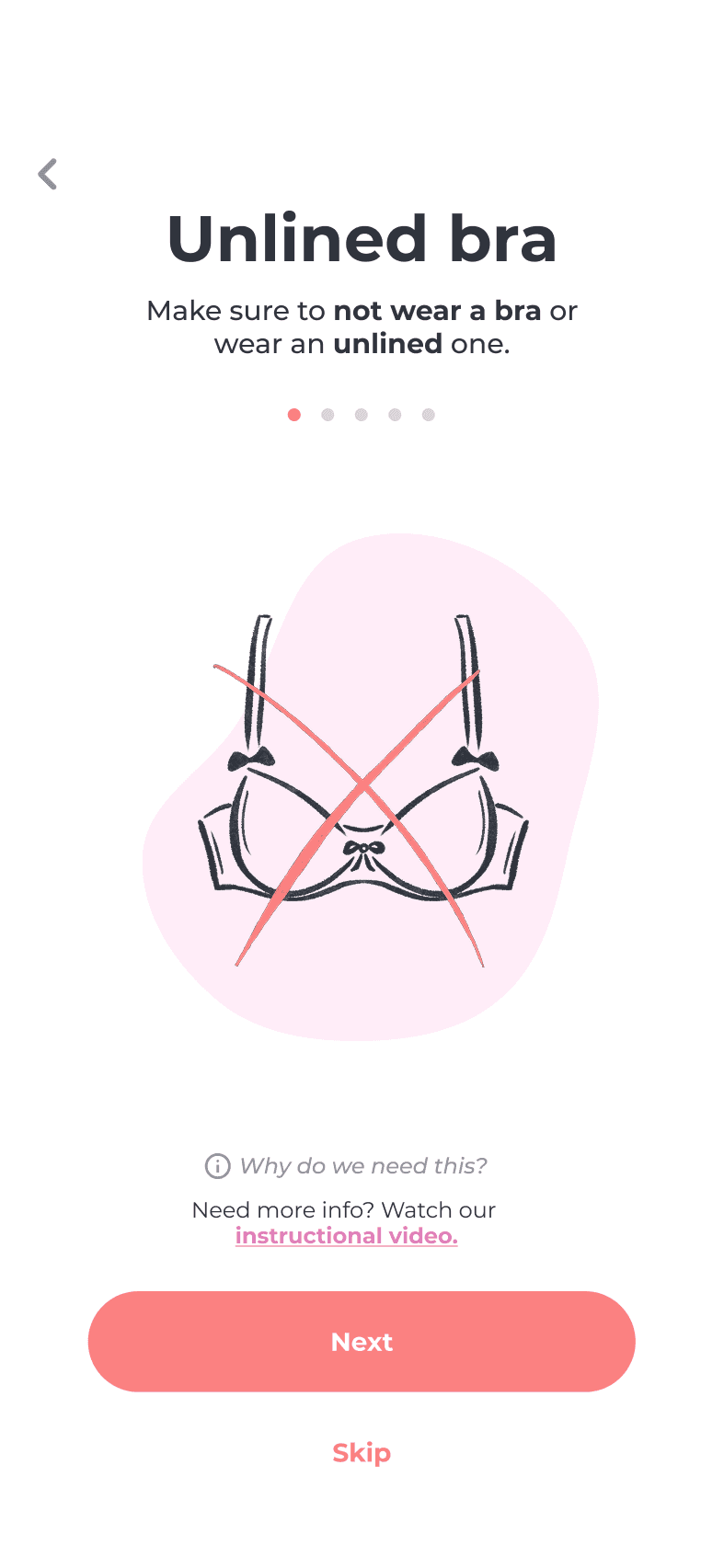
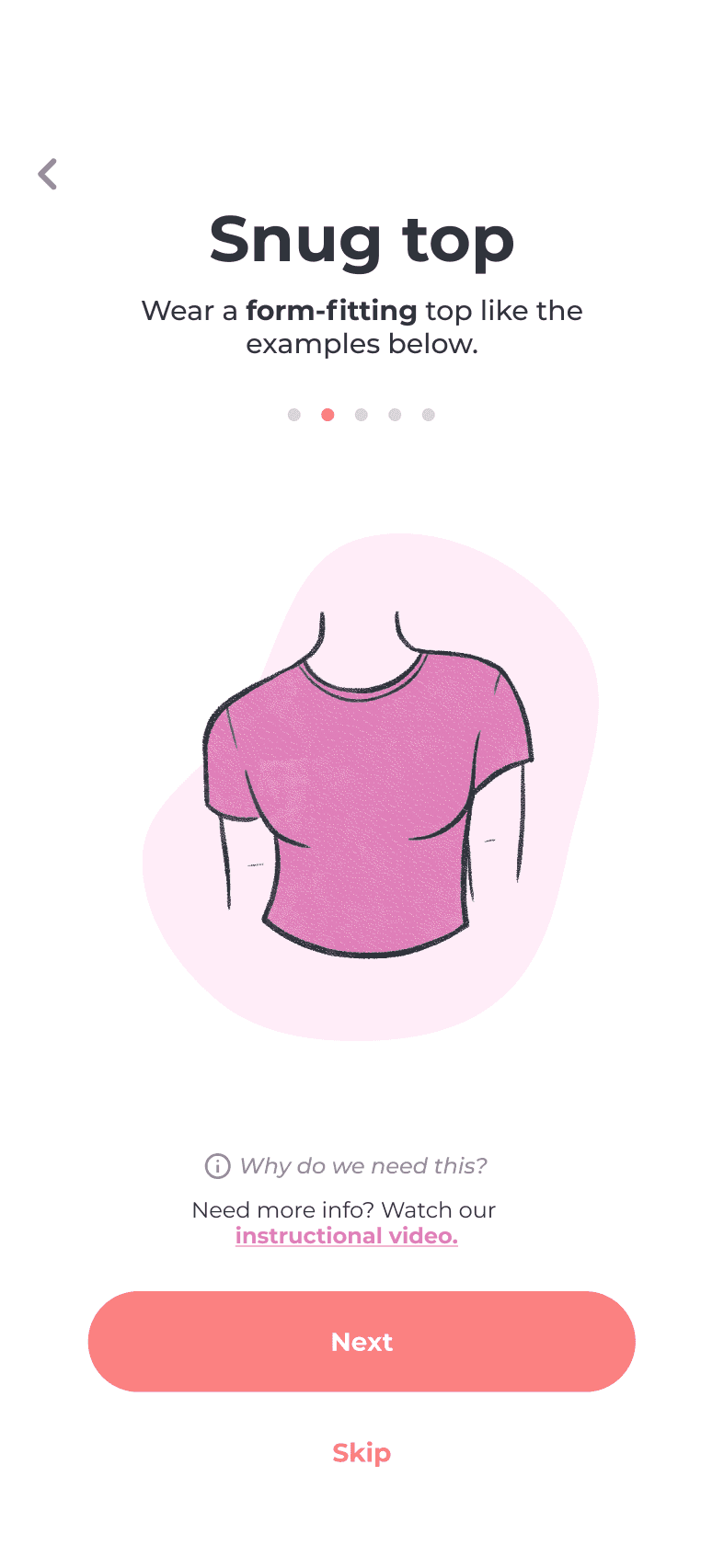
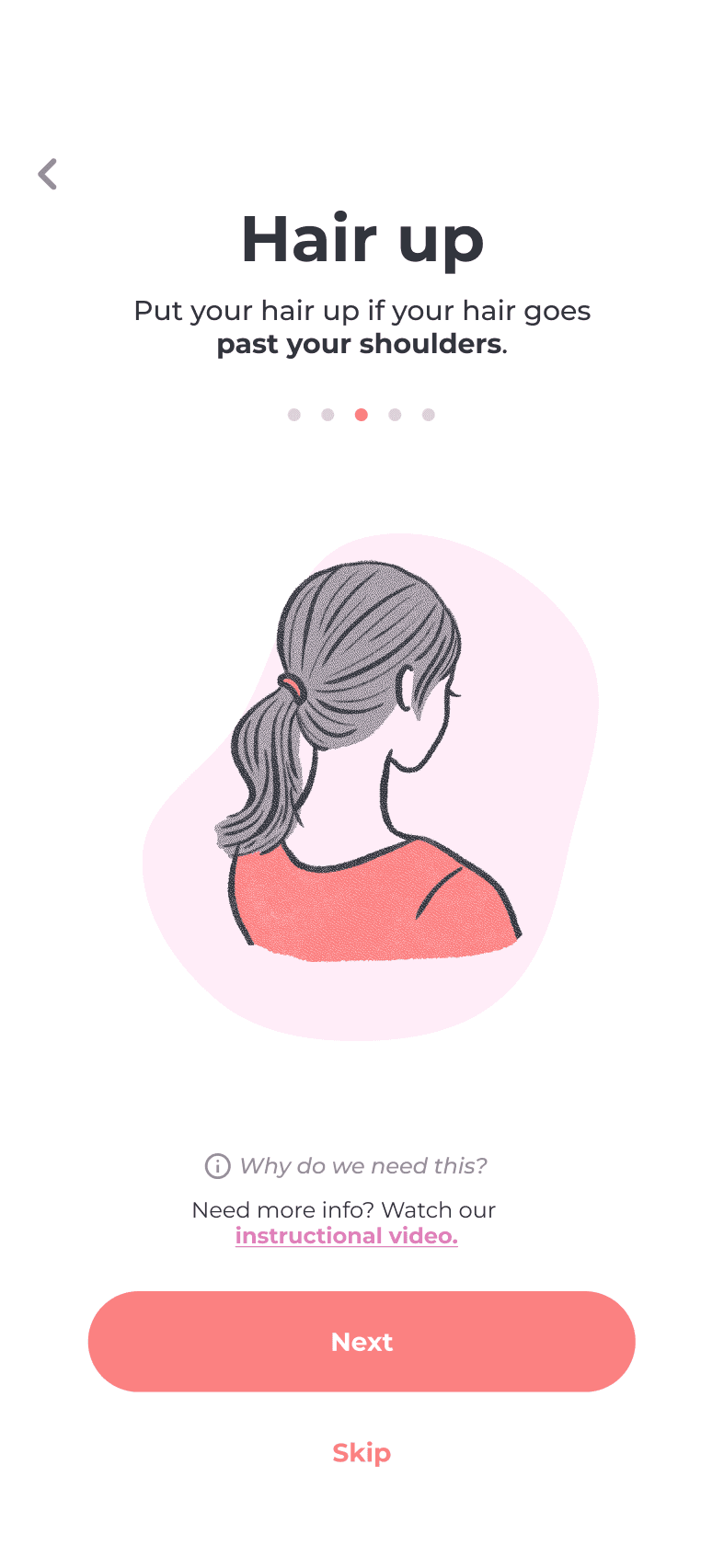
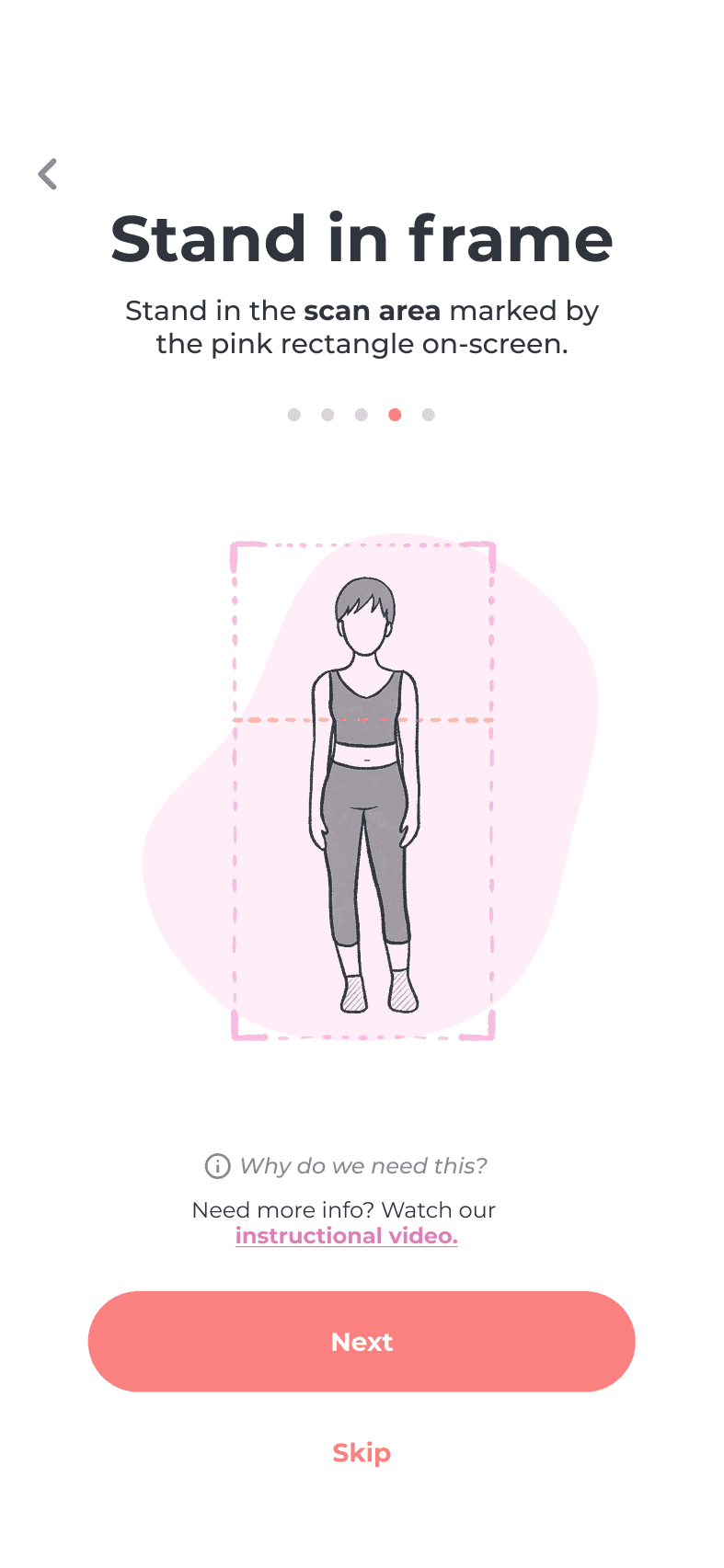
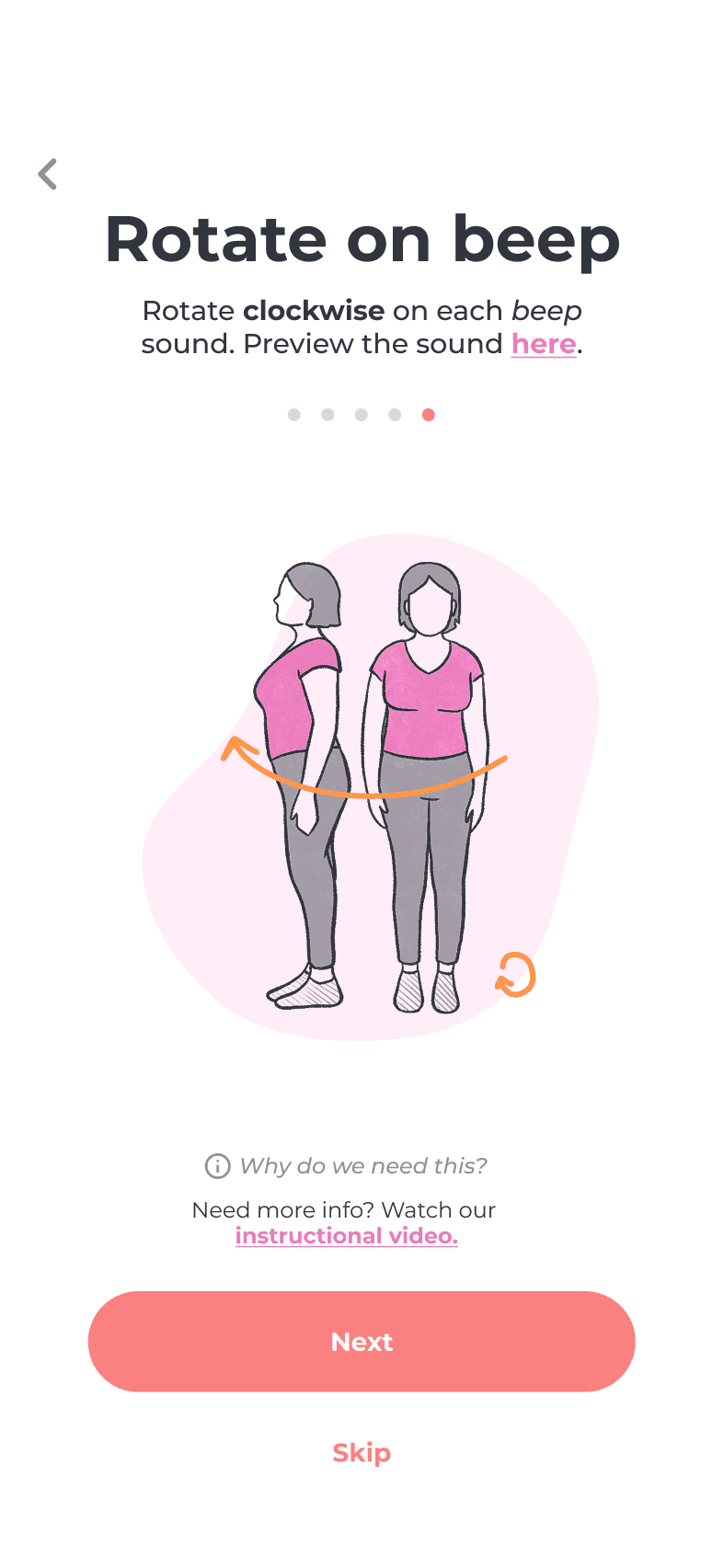
To strike a balance, I captured users’ attention with concise 2-3 word headings and brief two-line subheadings while streamlining the instructions from 7 steps down to 5 digestible ones.
Additionally, I introduced simple animations to create consistent and clear visual cues. This significantly reduced the time required to go through the instructions without compromising the success rate.
Our AI algorithm requires four snapshots—front, side, and back. Initially, I designed separate flows for each, but this proved inefficient. Users had to repeatedly set up their phone, step back, take a photo, walk back, and repeat the process multiple times, making it time-consuming and frustrating. To improve this experience, I tested multiple iterations, experimenting with on-screen guidelines, automatic instructions between scans, and other refinements to balance convenience and clarity.
🧐
Through testing, I found that users responded best to auditory signals and high-contrast visual cues, as these were easier to distinguish from a distance.
In the final design, I introduced a shaded outline to guide users into the correct frame, along with beeps for countdowns and turn prompts—both of which I preface in the instructions.
💡
The countdown timer features high-contrast, full-screen color overlays that sync with the beeps, ensuring clear visual and audio guidance.
The content of the quiz is critical for personalizing recommendations beyond just band and bust size. I refined the quiz iteratively, drawing from both primary and secondary research on the challenges women face when finding the right bra and what truly defines a good fit.
Initially, my iterations included questions about breast shape, a common approach in traditional fit quizzes.
🧐
However, I quickly found that this method is often ineffective - self-reporting breast shape is not only confusing for many users but also highly inaccurate, as most people aren't sure how to categorize themselves.
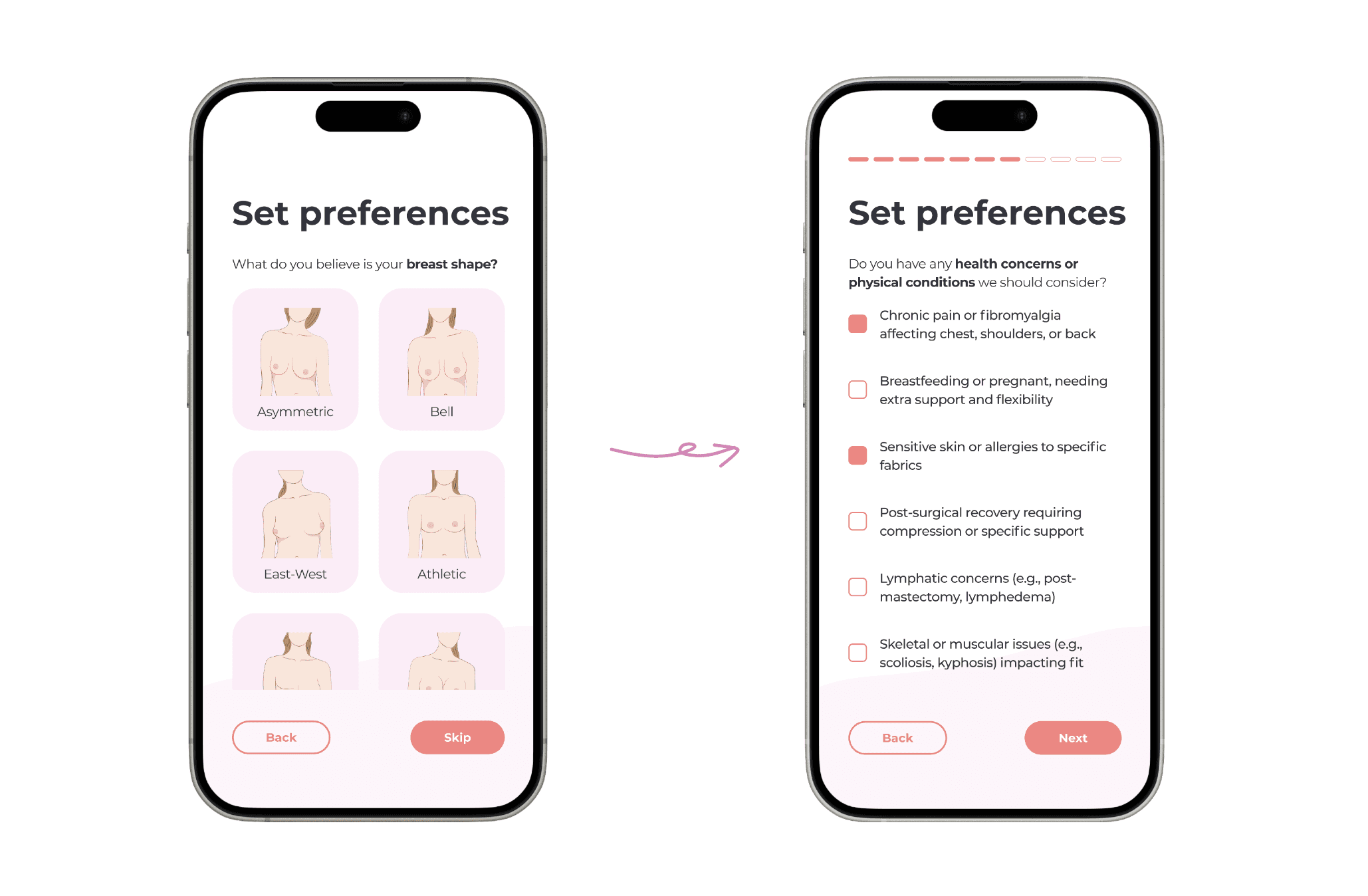
Instead, I redesigned the questions to focus on lifestyle, pain points, and fit concerns as the entry point.
💡
This approach makes it easier for users to reflect on their own experiences rather than trying to fit themselves into rigid categories.
Asking about fit issues they’ve noticed in their current bras allows for a more nuanced understanding. Users can describe a mix of problems they experience, which often stem from multiple factors rather than just one predefined shape.
Playful, personable onboarding
One-Shot Accuracy
Instructions that are scannable, intuitive, and easy to remember for zero-error data collection in a single attempt
Decisions That Feel Natural and Pain-Free
Structuring input around how users actually think in addition to what the algorithm needs, and building for partial completion without sacrificing data quality
Value That Compounds
Turning a one-time scan into a persistent personal profile
Investor and competition pitch deck
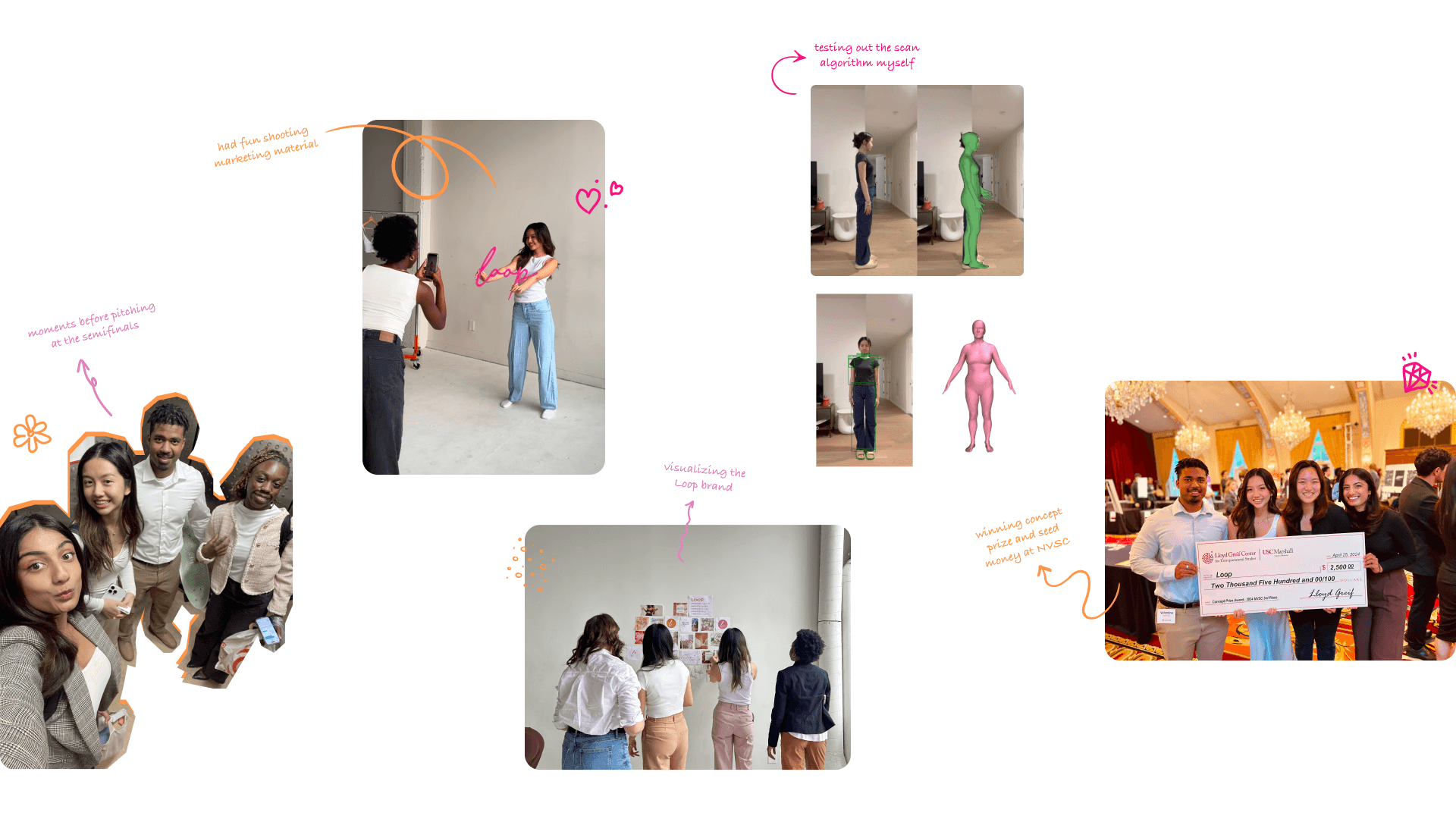
I also designed the presentation for VCs, competitions, and incubators that we enrolled in, including Penn Innovation Competition and USC New Venture Seed Competition. It summarizes the non-design work I contributed to, including underlying technology, business strategy, and financials.
Main takeaways
Balancing speed and precision in product design
Shipping fast is critical, but designing with scalability in mind prevents future bottlenecks. I learned how to prioritize core functionality without accumulating UX debt, ensuring that rapid iterations didn’t come at the cost of usability or long-term viability.Storytelling as a competitive advantage
A strong product isn’t enough—framing the problem and vision effectively determines whether investors buy in. I refined the skill of translating complex technology into a compelling narrative, making this AI-driven solution not just digestible, but persuasive.Building from zero requires ruthless prioritization
Unlike established companies, a startup operates with constraint-driven creativity—limited resources force hard decisions. I developed the ability to distill a broad vision into executable steps, focusing on what moves the needle now while ensuring the foundation supports future scale.